
If your HOA roads or commercial parking areas are cracking, fading, or holding water, the right fix depends on what’s happening below the surface. A quick coating won’t solve base failure, while full replacement can waste your budget when damage is still limited. We’ll help you compare asphalt paving services for HOAs and commercial properties in Central Phoenix so you can choose a durable, cost-effective scope with fewer surprises.
Asphalt Challenges For Central Phoenix Properties
Central Phoenix pavement faces constant ultraviolet exposure, high surface temperatures, heavy traffic, and sudden runoff. Those stresses dry the binder, widen cracks, weaken edges, and let water reach the base. Busy properties near Park Central and Uptown Plaza also need surfaces that support regular vehicle movement without creating avoidable access or safety problems.
Our site evaluation matters because surface symptoms can point to different causes. Fine cracks and fading may call for preventive work. Depressions, potholes, drainage issues, or signs that call for repairing alligator asphalt cracking may require deeper correction. We assess the pavement, drainage, traffic pattern, and base condition before recommending a project.
Comparing Asphalt Paving Solutions For HOAs And Commercial Sites
The best option balances present condition, expected service life, available budget, and disruption. For high-traffic properties, appearance matters too. Your comparison should account for access planning, drainage correction, striping, and long-term maintenance instead of focusing only on the lowest initial quote.
When Targeted Repairs & Preventive Maintenance Make Sense
Crack sealing limits water entry when cracks are narrow, and the surrounding pavement remains stable. Patching addresses isolated failures, while asphalt seal coating in Central Phoenix helps protect a sound surface from sunlight and oxidation. Your asphalt sealing frequency should reflect pavement age, exposure, and traffic rather than a generic calendar.
Targeted asphalt repair in Central Phoenix works best before deterioration spreads. It’s usually less disruptive and less expensive than replacement, but it won’t correct widespread base movement or serious drainage defects.
When Resurfacing Or Full Replacement Is The Better Fit
HOA parking lot resurfacing or commercial parking lot resurfacing can renew a broadly worn surface when the base is still serviceable. Milling removes damaged material, restores elevations, and prepares the area for a consistent overlay. Using asphalt milling in Phoenix, we can better control transitions, drainage, and tie-ins.
Full replacement is the stronger choice when failure is structural, recurring, or widespread. It costs more upfront and requires more coordination, but it gives you the opportunity to rebuild the base and correct chronic problems. If you’re also comparing materials, review asphalt versus concrete costs alongside service life and repairability.
Planning A Durable Asphalt Project In Central Phoenix
A clear plan protects your budget and keeps residents, tenants, customers, and vendors moving. Before work begins, confirm:
- pavement and base conditions
- drainage and accessibility requirements
- phasing, traffic control, and emergency access
- resident or tenant notices
- curing time and reopening sequence
- final parking lot striping in Phoenix
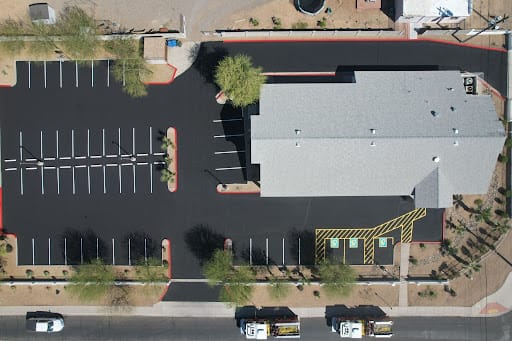
Your site can often remain partly open when the work is divided into logical phases. Fresh parking lot line paint should follow the approved layout and reopening schedule. You can also ask for references, warranty details, proof of appropriate licensing and insurance, and an itemized estimate.
Request A Central Phoenix Paving Estimate
A reliable recommendation starts with the surface in front of you. Infinity Paving – AZ provides commercial asphalt paving in Phoenix and practical recommendations based on site conditions, budget, access needs, and long-term maintenance. Send us your site plans or request an on-site assessment, and we’ll prepare a clear estimate for your Central Phoenix project.
Frequently Asked Questions About Asphalt Paving
How often should Central Phoenix asphalt be inspected?
Inspect your pavement at least annually and after major drainage or construction events. High-traffic areas benefit from more frequent visual checks for cracks, ponding, loose edges, potholes, and faded markings.
Should damaged pavement be repaired or completely replaced?
Repair isolated surface damage when the surrounding pavement and base remain stable. Choose resurfacing or replacement when distress is widespread, structural, or repeatedly returning.
How can an HOA minimize disruption during a paving project?
Use phased work, advance notices, clear detours, and a documented reopening schedule. Your contractor should coordinate resident access, deliveries, waste collection, and emergency routes before mobilization.
Can commercial parking lots remain partially open during paving?
Often, yes. Phased parking lot paving in Central Phoenix can preserve customer and tenant access when the site has enough circulation space and the work zones can be separated safely.